How Lizzie Rose Came to Be: From an Eye Roll to a Paranormal Mystery Series
Lizzie began with an eye roll.
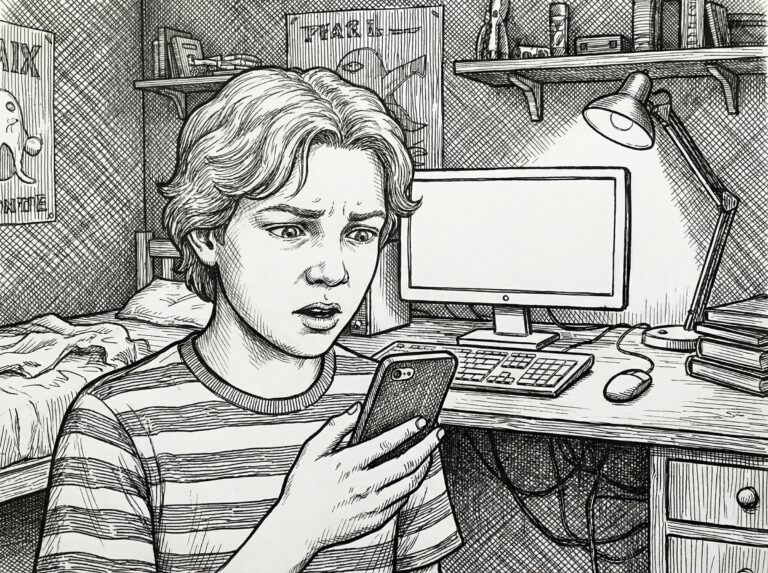
I was working on a Zack Taggart adventure, my first fiction book featuring a young spy, and one evening we were talking about the book as a family. My daughter, Beth-Rose, was a little put out that I was writing a book with her older brother as the main character.
“What about me? Can’t I be in the book?”
Unfortunately, I didn’t have an answer that would satisfy her. The story was already taking shape, and I couldn’t see a natural way to introduce a character based on her.
I explained that to her.
“It’s fine,” she said, with an eye roll that suggested it wasn’t entirely fine.
I felt I owed her something. Fair is fair, after all. If I was going to write about her brother, surely I could come up with something for her.
A few weeks later, I was half-jokingly thinking about what that something might be. Beth-Rose’s passion was dance, and she was preparing to pursue it at university. So I started playing with the idea of a dancing Buffy the Vampire Slayer, hunting evil spirits between rehearsals.
It was ridiculous enough to be entertaining. The more I thought about it, though, the more I liked the possibilities.
Then one day months later I started working on the plot and outlining the story, and I ran into a problem. The whole vampire-slayer thing felt a little too familiar. I didn’t want to write another version of a story that had already been told countless times.
What if, instead of hunting supernatural creatures, my character attracted them?
What if restless spirits simply found her, whether she wanted them to or not?
And just like that, the idea for The Millbrook Haunting, the first Lizzie Rose paranormal mystery, began to take shape.
From Beth-Rose to Lizzie Rose
When I first started writing Lizzie, she was essentially Beth-Rose. I pictured my daughter as the character and drew on the qualities I knew so well.
Beth-Rose can be blunt. She’s a little cynical, remarkably mature for her age, and has very little patience for unnecessary drama. That last quality sets her apart from a lot of teenagers. She doesn’t suffer fools gladly, and she certainly doesn’t go looking for trouble.
Those traits gave me a starting point for Lizzie.
But something interesting happened as I developed her character. Lizzie gradually became her own person. She retained many of Beth-Rose’s qualities, but she began to develop a personality, history, and way of looking at the world that belonged entirely to her.
I remember working on Lizzie’s character profile. It grew to about three pages before I realized I was dealing with someone I couldn’t necessarily predict. But she was becoming someone I wanted to get to know.
I started asking myself, “What would Lizzie do in this situation?”
That might sound like a perfectly ordinary question for a writer, but it marked a turning point for me. Lizzie was no longer simply an extension of my daughter. She had become a distinct human being in my imagination.
And, just like Beth-Rose, she doesn’t always cooperate.
I’ll outline a scene, convinced I know how it’s going to unfold, only to discover that Lizzie takes things in a completely different direction once I start writing. Sometimes the character knows what she’s going to do before I do.
That’s one of the things I enjoy most about writing fiction. You can create a character who surprises you, challenges your plans, and occasionally makes a complete mess of the story you thought you were going to tell.
Lizzie has become very good at that.
A Spirit Magnet Who Can’t Let Things Go
From the beginning, I was interested in the idea of a character who finds herself in a situation beyond her control.
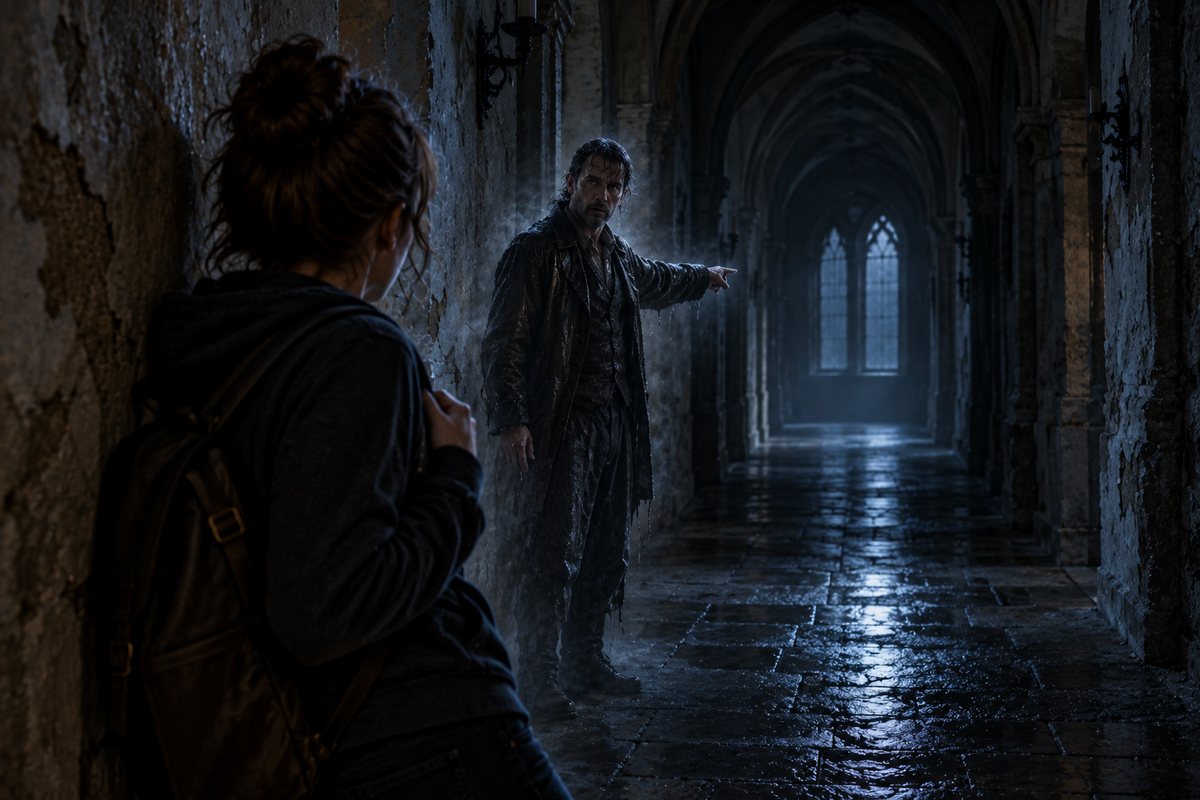
I didn’t want Lizzie to be someone who went looking for demons or supernatural adventures. I wanted these things to happen to her. She has some nebulous quality that makes her a magnet for the spirit world, but she can’t control it, and she doesn’t really understand why it happens.
Instead of hunting ghosts, the ghosts find her.
I also didn’t want every spirit to be an evil presence that needed to be defeated. I was much more interested in the idea of a restless spirit being trapped by unfinished business, perhaps because of a terrible injustice that had left it unable to move forward.
When Lizzie enters that spirit’s world, she becomes a possible route to resolution.
Of course, there’s a complication. Lizzie is stubborn, tenacious, and has a soft spot for the underdog. She cannot let an injustice go once she recognizes it.
Even if the underdog has been dead for 250 years.
So although she might be reluctant to accept the label of “spirit magnet,” she inevitably becomes emotionally invested. She wants to understand what happened, why the spirit remains trapped, and whether there’s something she can do to help.
And once she’s involved, walking away isn’t really an option.
That determination is partly inspired by my daughter, but there’s a little of me in Lizzie as well. Injustice toward people really pisses me off. I can see something happening that I believe is wrong and feel that my hands are tied. At the same time, I’m inclined to shy away from confrontation.
Lizzie doesn’t have that problem.
I suppose she’s a bit of an alter ego. She’s someone I can create who will say the things I might hesitate to say and take action when I might otherwise hold back. Fiction gives you the freedom to let a character act in ways you would never consider doing yourself.
It’s rather satisfying, really.
Why a Dancer?
Dance was always going to be part of Lizzie’s identity. It was, after all, the reason I’d thought of the character in the first place.
But when I began writing The Millbrook Haunting, I wasn’t entirely sure how important dance would become to the series. I knew I wanted Lizzie’s dancing life to be part of the story, and I wanted the prose to reflect the environment in which she lived and worked.
In the first book, she’s just beginning to find her feet — pun intended — in the professional dance world.
As I worked through the first draft, however, I began to see the possibilities. I’d introduced several supporting characters who were fellow dancers, and I realized there was an opportunity to develop Lizzie alongside these other interesting people. Their shared experiences, professional ambitions, and relationships could have an impact on future stories.
Dance couldn’t simply be something Lizzie did between paranormal encounters. It had to become a central thread running through the series.
That realization helped shape what came next.
The idea for the second book was partly inspired by one of the international students we’d hosted over the years. We had a German student from Bavaria, and I liked the idea of taking Lizzie and her world somewhere outside their usual surroundings.

I began researching the area, and as I learned more about it, ideas for the story started to emerge. I also wanted to introduce a living antagonist, something the first book hadn’t really required. I liked the idea of a mystery Lizzie would have to solve in order to help a spirit find resolution.
By the time I was working on the final drafts of the second book, I could see the beginnings of a series. But what was really driving me to a series was how much I enjoyed writing about Lizzie. She’s genuinely a fun character to write about, and to write with!
I decided the initial series would consist of six stories, with travel and dance as the main connecting threads.
And then the research took me somewhere I hadn’t anticipated.
History and Dance Meet Paranormal Mystery
I discovered that I really enjoyed researching the places Lizzie visited. I wanted to understand their history and culture, rather than simply use them as backdrops for a ghost story.
But I also wanted dance to be a meaningful reason for those places to matter.
Were there historical dances associated with particular regions? Were there cultural traditions that could connect dance to something mysterious or unexplained? Could the history of a dance provide the foundation for a paranormal story?
I started looking at different traditions around the world, including Haitian Vodou, Brazilian Capoeira, and became fascinated by the possibilities.
From the third book onward, I decided that each story would feature a historical dance tied to its setting.
For Book 3, that meant the tarantella in Puglia, southern Italy. For Book 4, it meant the Danza de los Diablos in Mexico.
The challenge was finding a story that made sense within the historical and cultural framework. The last thing I wanted was to write a cheesy ghost story that treated a culture’s traditions as little more than spooky window dressing. Even when you’re writing paranormal fiction, the story needs a degree of believability within its own world.
The research for the tarantella led me to the tensions between the Church during the Counter-Reformation and the peasant culture of agricultural Puglia. I became interested in the lives of women who had very little power over their own circumstances.
That history offered an opportunity to create a character who had died tragically and whose story remained unresolved. The dance itself could become the connection that brought her to Lizzie.
That was the kind of story I wanted to tell: one in which the supernatural element grew out of the history and the lives of the people who inhabited it.
The more I explored these connections, the more I realized that dance, travel, history, and the paranormal could work together in ways I hadn’t imagined when I first sat down to write about a dancing vampire slayer.
Sometimes you don’t know what a series is going to become until you start writing it.
A Character With Her Own History
There’s another aspect of Lizzie that becomes increasingly important as the series develops: her own backstory.
In the third book, readers begin to learn more about Lizzie and understand some of the experiences that have shaped her. I wanted to give readers a deeper understanding of who she is, beyond the bluntness, the stubbornness, and her reluctance to accept her role as a spirit magnet.
As I developed her history, I began to see parallels between Lizzie’s experiences and those of the spirits she encounters.
The injustices that draw her toward these spirits aren’t simply abstract problems to be solved. They connect with something personal in her own life.
I won’t say any more about that. Some things are better left for readers to discover in the books.
But it reinforced something I’d come to understand about Lizzie: her determination to help others isn’t just a convenient device for moving a plot forward. It’s part of who she is, and it becomes more meaningful as we learn more about her.
She’s flawed, as any interesting character should be. She can be stubborn to a fault, and her determination to put things right doesn’t always make her life easier.
But she cares. And when she believes something is wrong, she finds it almost impossible to look the other way.
So, Who Is Lizzie Rose?
When I started writing Lizzie, I was trying to come up with something for my daughter. I certainly wasn’t planning an elaborate paranormal mystery series built around historical dance traditions.
The character grew. The stories grew. And somewhere along the way, Lizzie became someone I genuinely enjoy spending time with.
I still draw on some of the qualities that inspired her in the first place, but she has become her own person. She surprises me, challenges my outlines, and occasionally takes a story in a direction I hadn’t anticipated.
That’s part of the fun.
I don’t have any grand expectations for what readers should take away from a Lizzie Rose story. I start with character. The mystery, the paranormal elements, the historical research, and the settings all matter, but they work best when they’re serving the people at the heart of the story.
If readers finish one of the books feeling that they know Lizzie a little better, and that she’s someone they’d like to spend more time with, then I’ve accomplished what I set out to do.
It doesn’t matter whether she’s in a ghost story or a comedy. She should be someone readers care about.
And to think, it all started with an eye roll.