The Making of Zack Taggart
Long before Zack Taggart became a twelve-year-old spy, he was an idea that took shape around a campfire.
To understand where he came from, though, you have to go back to bedtime.
When my son Zachary was young, we worked our way through the Hardy Boys books together. He loved amateur sleuths, mysteries, and stories involving characters who were clever enough to get themselves into trouble and resourceful enough to get themselves out again.
I did my best to bring the books to life by giving the characters different voices. Some were more successful than others, but my interpretation of Chet Morton seems to have stuck. Zach still talks about that voice and how perfectly it matched the character he’d imagined in his own head.
I sometimes wonder whether those bedtime performances had anything to do with his eventual choice of voice acting as a profession. If so, I’m pleased to have contributed. If not, at least I provided the occasional free audio book performance.
The Hardy Boys weren’t the only stories capturing his imagination. Books like Alex Rider and Flat Stanley offered adventure, intriguing characters, and, in the case of the spy stories, all those wonderfully cool gadgets. Zach loved the characters as much as the adventures themselves.
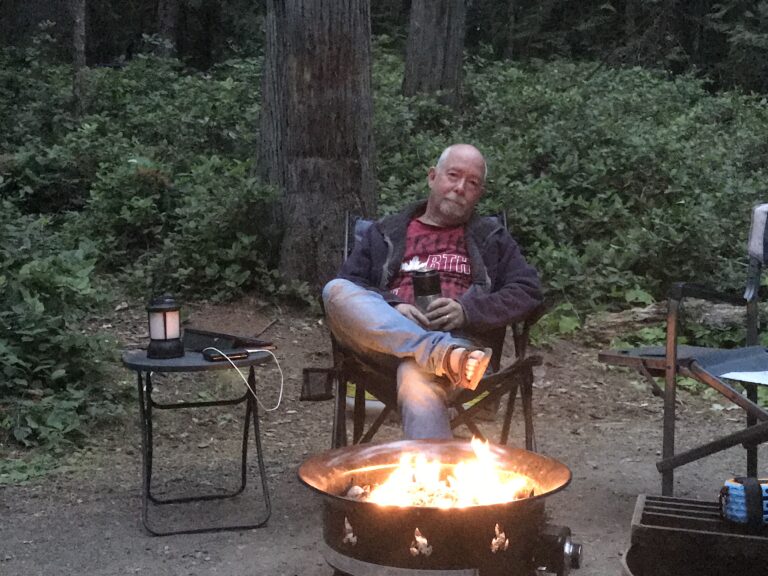
So, one weekend while we were camping, we started talking about making up a story of our own.
Somewhere in that conversation, I came up with a name: Zack Taggart.
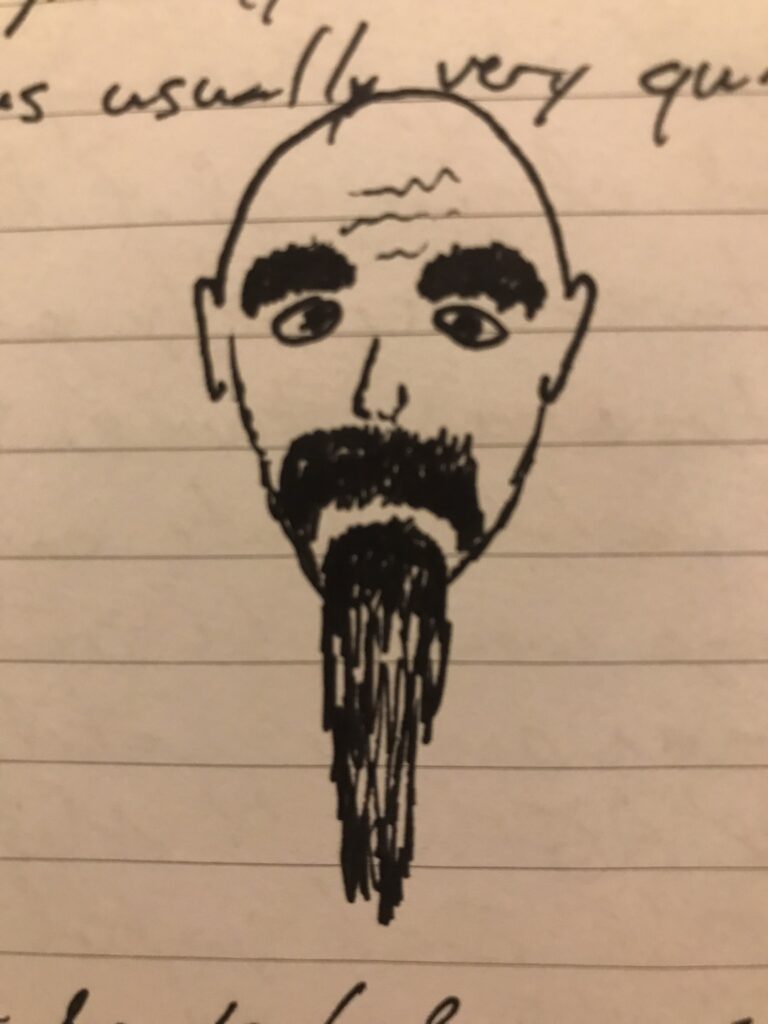
At first, Zack Taggart was roughly nine or ten years old, about the same age as Zach. We began inventing the world around him, including the organization he would work for. I even sketched what his boss looked like. I still have that drawing, which is rather remarkable considering how many ideas disappear into the mist over the years.
And then there was the outhouse.
I can’t remember exactly how we arrived at this particular plot point, but at some stage we decided that an outhouse was going to explode.
Why? Why not? We were inventing a spy adventure, and I was talking with a boy who was around ten years old. What ten-year-old wouldn’t appreciate the prospect of blowing up an old outhouse? It was ridiculous, unexpected, and exactly the sort of thing that makes a story memorable.
We had the beginnings of a character, an organization, a boss, and at least one spectacularly undignified incident. I jotted down some of our ideas in a notebook, presumably intending to do something with them eventually.
Then life carried on.
I’m the sort of person who keeps notebooks everywhere. Over the years, I’ve filled them with all sorts of things: journal entries, positive affirmations, stream-of-consciousness writing, and random ideas that seemed important enough to write down at the time. The trouble is that I rarely seem to run out of notebooks, and I have a habit of starting new ones before rediscovering the old ones.
The notebook containing our Zack Taggart ideas quietly disappeared onto a bookshelf, where it blended in with books, papers, and other notebooks. It remained there, undisturbed and forgotten.
For about ten years.
That’s right. Zack Taggart spent a full decade doing absolutely nothing. No missions. No secret assignments. No training. Not even a second exploding outhouse.
He was, as far as anyone knew, just another forgotten idea in a notebook.
Eventually, I went looking for something I’d written down and couldn’t remember which notebook I’d put it in.
This is the inherent problem with having notebooks scattered around the house. When you want to track down a brilliant idea you had six months ago, you have to search through all of them. I say you, but of course I mean me.
So there I was, pulling notebooks off shelves and flipping through pages, trying to find whatever it was I’d originally been looking for. And then I stumbled across the Zack Taggart notes.
Suddenly, the original search became completely irrelevant.
I found my favourite chair, settled in, and started reading through what Zach and I had come up with around that campfire a decade earlier. The character, the organization, the boss, and the beginnings of an adventure were all there, waiting patiently for someone to remember they existed.
I had no idea where the idea might lead, but I was intrigued all over again. What had started as a bit of fun between a father and his son was still sitting there, full of possibilities.
Somewhere between rediscovering those notes and settling into that chair, Zack Taggart got a second chance.
Before the Story, There Was Zack
Rediscovering the notebook was one thing. Turning those old notes into a novel was another.
I was beginning to understand that, before I could write a good story, I needed to know my main character. Really know him. Not just his name, his age, or the fact that he worked for a secret organization. I needed to understand who Zack Taggart was, what made him tick, and what made him someone a reader would want to spend time with.
This probably comes from another of my favourite pastimes: watching movies with my family.
We’re all movie lovers, and we have remarkably similar tastes. We enjoy discussing what we’ve watched, what worked, what didn’t, and why some films stay with us long after the credits roll.
For me, a great movie doesn’t necessarily begin with a great story. It begins with a great character.
Give me someone interesting, someone I can relate to or at least understand, someone with strengths, flaws, and a personality of their own, and I’m willing to follow them into just about any situation. A clever plot can certainly help, but even the most ingenious story line will struggle if I don’t care about the people caught up in it.
The reverse is also true. When I care about a character, I can forgive a lot. I’ll follow them through unexpected twists, terrible decisions, and situations that would have any sensible person heading for the nearest exit.
So before I worried about Zack’s first mission, I needed to get to know Zack himself.
I wanted to understand what made him exceptional, but also what made him a kid. What did he care about? What made him laugh? What frightened him? How did he behave when things went wrong? And how would he handle the responsibility of doing a job that most adults would find daunting?
Originally, Zack was about nine or ten years old, roughly the same age as Zach had been when we’d dreamed him up around the campfire. But as I started developing the character and thinking seriously about the kind of adventures he would have, I realized that age wasn’t going to work.
Zack needed to be twelve.
Those two years might not sound like much, but there’s a significant difference between a nine-year-old and a twelve-year-old. At twelve, Zack could plausibly have more independence, more sophisticated reasoning skills, and a greater capacity to take on the responsibilities of his unusual job. He could still be unmistakably a kid, with all the complications that come with that, while having enough maturity to carry a story involving espionage and international intrigue.
It was one of the first lessons I learned in developing him: sometimes the character you begin with isn’t quite the character your story needs.
The gadgets and the espionage would come later. First, I needed a hero worth following.
Building Zack’s World
I spent a few days getting to know Zack. Once I was happy enough with the character to move forward, I turned my attention to the world he would inhabit.
That meant figuring out the agency he worked for, how it operated, and where Zack fitted into the organization. He couldn’t simply be a twelve-year-old boy wandering around getting involved in international espionage. There had to be a reason he was there, a place for him within the agency, and some explanation for why anyone would trust a kid with that kind of responsibility.
With the character and his world beginning to take shape, I was finally ready to tackle the story itself.
Or, more accurately, the outline.
Before I started writing chapters, I sat down and asked myself a series of questions.
What had happened to get Zack involved in the story? Where had it happened? Who was behind it all? And, perhaps most importantly, how was it going to be resolved?
Those questions gave me a framework to work with. I didn’t need every scene figured out, but I needed to know the basic shape of the adventure: what set things in motion, what Zack would have to deal with, and where it was all heading. With those foundations in place, I could begin fleshing out the story.
There was just one small problem.
Well, two, actually.
Science and technology.
I wasn’t terribly comfortable with either of them, and a young spy story was going to need both. For starters, there was the exploding outhouse. It couldn’t simply blow up because it would be funny if it did. There had to be some sort of scientific explanation, even if that explanation was a little more imaginative than anything I’d encountered in real life.
Then there were the gadgets. Every self-respecting young spy needs cool equipment, and Zack was certainly going to have his share. The trouble was that I would have to invent those gadgets, along with the science that made them work.
I’m not a scientist. I’m not a technology expert, either. I was a writer who had somehow committed himself to explaining things he didn’t fully understand.
Still, I’d come this far. I had a character I liked, a world to put him in, and the beginnings of an adventure. I wasn’t about to let a few inconvenient scientific details get in the way.
Enter the AI
Faced with the prospect of inventing scientific explanations and spy gadgets, I decided I needed some help. That’s when AI entered the picture.
My first stop was Perplexity. I’d used it extensively while researching visa information for a nonfiction book about overseas retirement options, and I liked its ability to search the web and provide citations for the information it returned. When you’re dealing with facts, being able to follow the sources is rather useful.
So I started asking questions. Lots of questions.
I researched atmospheric phenomena, plasma energy, and even James Bond gadgets. If I was going to write about a twelve-year-old spy equipped with technology that stretched the imagination, I wanted at least some grounding in the real world. I needed to understand what was scientifically plausible, what might be possible with a little creative licence, and what belonged firmly in the realm of fiction.
Once I had gathered enough material to get started, I turned to ChatGPT.
I explained the kind of story I wanted to create and provided my rough chapter outline. Then I began asking questions about how I might improve it. Were there gaps in the plot? Did the sequence of events make sense? Could a particular development be made more convincing? Were there ways to improve the pacing or build on an idea I’d already introduced?
Over the following few weeks, I returned to those conversations repeatedly. We’d work through plot points, explore alternatives, and examine how the different pieces of the story fitted together. Sometimes I was looking for a solution to a specific problem; other times, I simply wanted to explore an idea and see where it might lead.
It wasn’t a case of asking AI to write a novel for me and then putting my name on the cover. I had the character, the basic concept, and the outline. I was using these tools to research, test ideas, and help me think through the story.
In a way, it was an extension of the brainstorming we’d started around that campfire all those years earlier. Only now, instead of bouncing ideas off my son, I had access to a vast amount of information and an endlessly patient sounding board.
And unlike Zach, the AI never once suggested blowing up another outhouse.
At least, not that I can remember.
When the Story Takes Over
I soon discovered that having an outline didn’t mean I was going to follow it.
Even after refining the outline with ChatGPT, the moment I started writing the actual story, things began to change. Scenes led me in directions I hadn’t anticipated. Characters did things that created new possibilities, and suddenly the carefully planned sequence of events wasn’t quite working the way I’d imagined.
So I changed it.
Then I changed it again.
I added chapters to make things work, developed new situations, and introduced characters who hadn’t existed in my original plan. One of those was a fellow named Óscar, whose arrival created some new possibilities for the story. But bringing him into the mix meant introducing additional elements that needed room to develop, which meant — you guessed it — more chapters.
My outline was becoming less of a fixed plan and more of a living document. It gave me somewhere to start, but the story itself was teaching me what needed to happen next.
There was another aspect of the writing process that I found particularly enjoyable. Having spent years working in the film industry, I naturally tended to visualize the chapters as scenes playing out in front of me.
I wasn’t just thinking about what happened. I was imagining where the characters were, what they were doing, what the audience would see, and how one scene would connect to the next. I often approached a chapter almost as if I were preparing to shoot it.
That way of thinking became especially useful as I worked toward the climax. I wanted to create parallel action between different scenes, cutting between events as the tension built. Rather than following one continuous sequence, I could move between different strands of the action and let them build toward the same moment.
It was a lot of fun to work out. I could see the scenes in my head, almost like a film unfolding, and the challenge was figuring out how to translate that visual experience onto the page.
It also reinforced something I’d already begun to learn: an outline is a useful tool, but it isn’t a contract. Sometimes you have to let the story take you somewhere unexpected — even if it means adding a few chapters and introducing a character you hadn’t planned on.
Bringing Zack to Life
By the time I’d worked through the first few drafts, Zack Taggart had become something much bigger than the idea we’d come up with around a campfire. That original conversation had given me a name, a secret organization, a boss, and an exploding outhouse. The book that emerged was a considerably more elaborate affair.
I also realized that I wanted to capture something of the old-fashioned Hardy Boys mysteries I’d enjoyed reading with Zach. I liked the idea of a classic adventure story, complete with illustrations that gave readers a glimpse of the characters and the action.
There was just one small obstacle.
I can’t draw.
Not a little bit. Not even badly enough to pass it off as a distinctive artistic style. And I had absolutely no budget to hire an illustrator.
Naturally, I turned to AI again.
Before I go any further, I should probably apologize to my children. They’re both pretty vehemently opposed to AI-generated artwork, and I suspected they might have some opinions about my plan. Fortunately, my humble apologies appear to have been accepted, and I was allowed to proceed with the project.
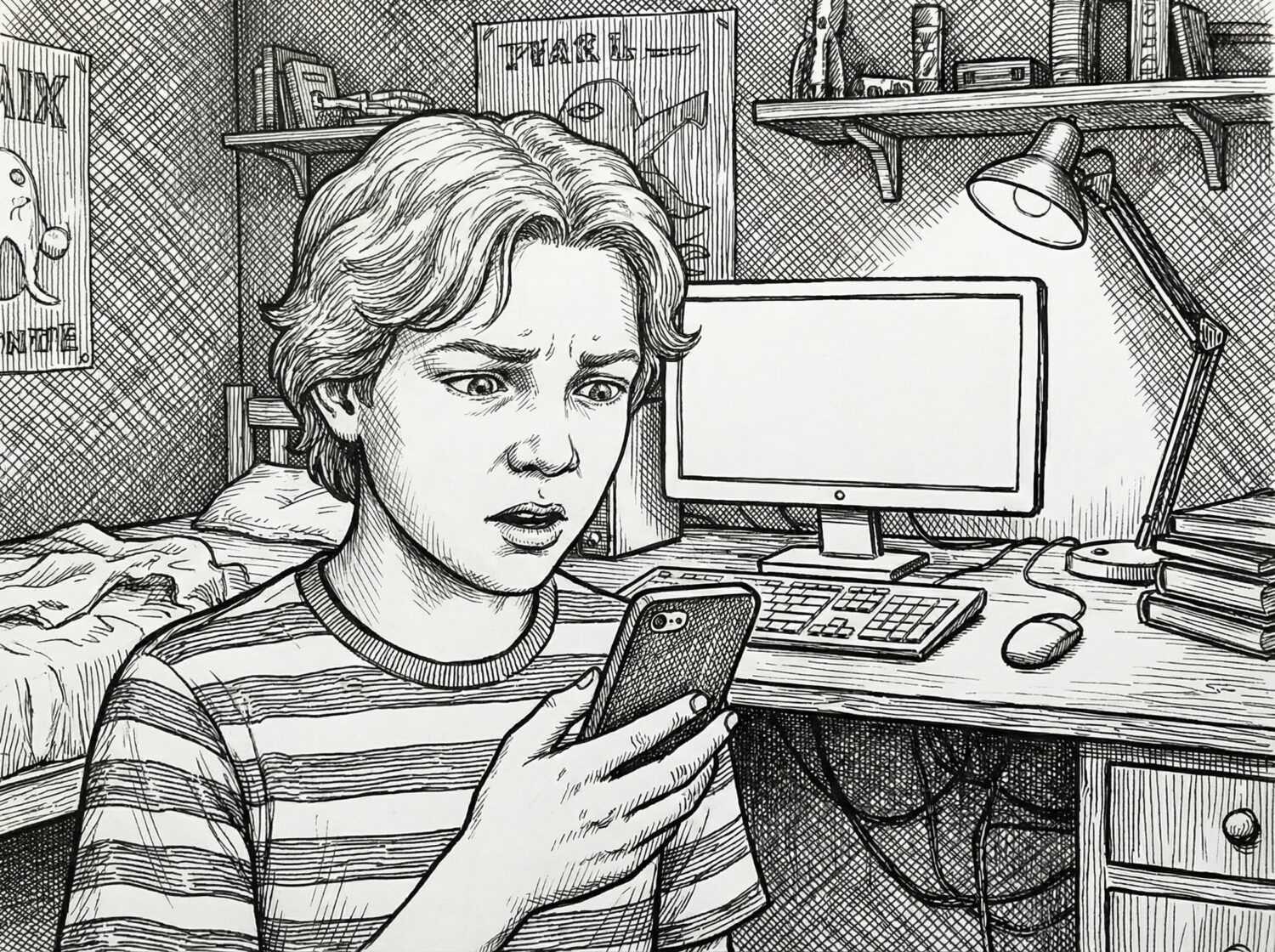
My first challenge was creating an image of Zack himself. Getting him to look the right age took some work. A twelve-year-old boy needs to look twelve, not eight and not sixteen, and AI image generators don’t always seem to appreciate the distinction.
Eventually, I had an image I was happy with. I used it as the starting point for creating other illustrations featuring Zack in different situations throughout the story.
It took some experimenting, but eventually I had nine or ten images I liked enough to include in the manuscript. They gave the book the illustrated adventure feel I’d been looking for, and helped bring some of the action to life in a way that words alone couldn’t quite manage.
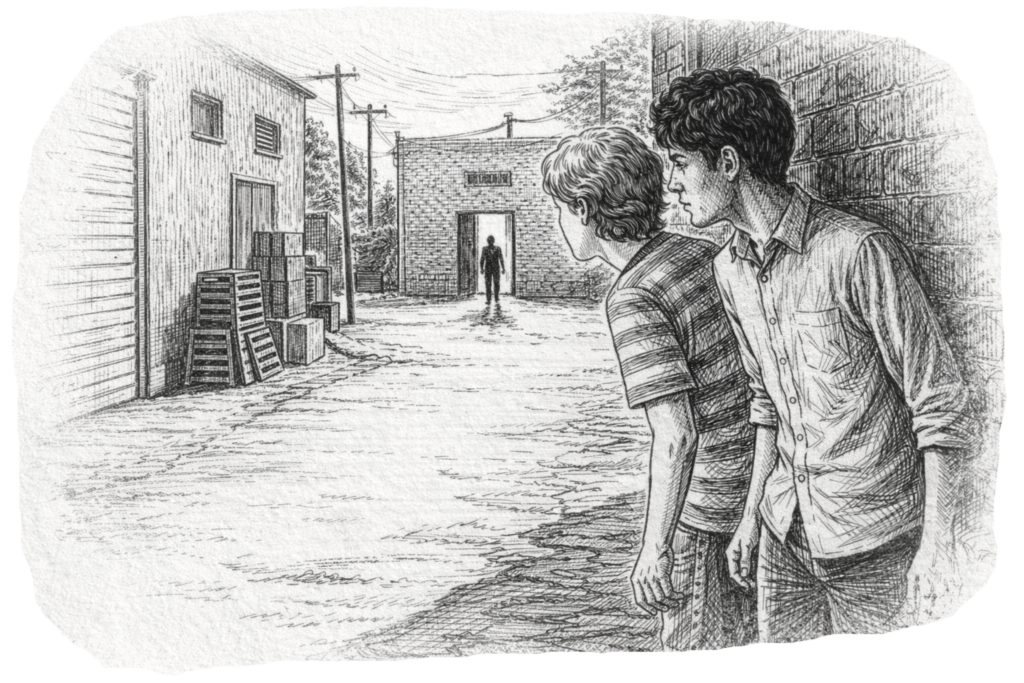
Are they perfect? No. Are they the work of a professional illustrator? Absolutely not.
But they fit the story, and I’m genuinely pleased with how they turned out. For a project that began with a conversation around a campfire and an idea about blowing up an outhouse, that felt like a pretty good result.
The One Thing That Still Makes Me Nervous
For all the fun I had creating Zack Taggart and writing his first adventure, there was one part of the process that made me considerably less comfortable.
The science.
I was writing a story involving atmospheric phenomena, plasma energy, and technology that, in some cases, existed more comfortably in my imagination than it did in the real world. I spent a lot of time researching, asking questions, and trying to make the explanations sound plausible. But when it came time to publish the book, I still had doubts.
Would readers buy it? Would the science sound credible enough to support the story? Would someone who knew considerably more about these subjects than I did read a passage and immediately conclude that I hadn’t a clue what I was talking about?
It was, without question, the hardest part of writing The Bucerias Anomaly. Coming up with characters, developing the plot, and figuring out how to get everyone from one dangerous situation to the next were all challenges, but they were challenges I enjoyed. Making the science convincing was another matter entirely.
And it’s something I’ll have to think carefully about as I consider future Zack Taggart adventures. The gadgets, the technology, and the scientific ideas are part of what makes his world fun. But I want readers to feel that the story is credible enough to enjoy, even when the events themselves are extraordinary.
The encouraging thing is that the comments I’ve received about my concerns have been very positive. Readers seem willing to come along for the ride, and that means a great deal to me.
Does that mean I’m ready to dive straight into another science-heavy Zack Taggart adventure?
Let’s not get carried away.
I’m still the fellow who started this whole thing by deciding that an exploding outhouse would be a splendid idea. I may have come a long way since that campfire, but I’m not entirely convinced I’ve mastered plasma physics.
Stay tuned.